Free tool
How much fiber does your child need?
Move the slider to your child's age. We'll show their daily fiber target using the simple rule pediatricians use — no sign-up needed.
Based on the AAP (American Academy of Pediatrics) rule: daily fiber (g) = age + 5.
The rule
The “age + 5” rule, explained
The American Academy of Pediatrics (AAP) offers a simple way to estimate how much fiber a child needs each day: take their age and add 5. The answer is the daily target in grams.
⚠️ This is general guidance, not medical advice. Every child's needs are different — talk to your pediatrician about your child.
Where to get it
Fiber in everyday foods
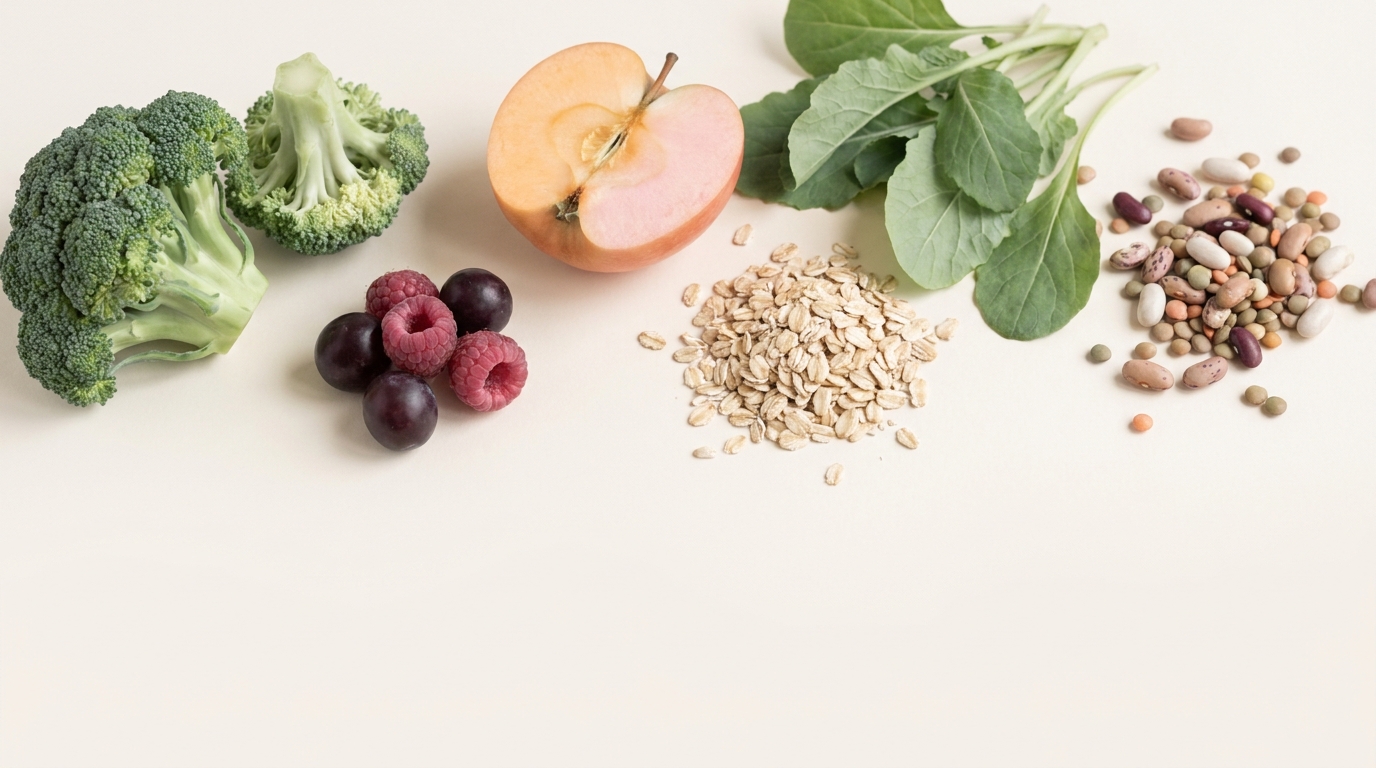
A few good choices add up quickly toward the daily target.
Oats, whole wheat, buckwheat, brown rice
Can be stirred into soups or purées.
Sweet potato, carrot, spinach, squash
Can be steamed and puréed.
Apple, pear, peach
Fiber is higher when given with the skin.
Dried apricots, prunes, dates
Crush them; watch for choking hazard.
Lentils, chickpeas, peas
Start small; may cause gas.
Approximate values — fiber content varies with preparation and portion size.
Why it matters
What fiber does for kids
- 🟢Supports regular bowel movements
- 🟢Helps balance intestinal flora
- 🟢Aids appetite management
- 🟢Extends how long children feel full
- 🟢Gives natural support to digestion
Research suggests balanced fiber intake can reduce constipation complaints in children.
Tips
Adding fiber, gently
- ✓Add fiber-rich foods gradually and in varied ways.
- ✓Encourage children to eat vegetables and fruit.
- ✓Fiber can't help without enough water — pair the two.
- ✓Look at overall nutrition before increasing portions.
- ✓Too much fiber can cause gas and bloating.
Some fiber-rich foods (wheat, chickpeas, dried fruit) can trigger allergies. Try a small amount of any new food first, and be cautious if there's a known family allergy. Fiber-rich foods help with constipation but are not a medical treatment.
Knowing the target is step one. Hitting it is the journey.
Pooficient connects what your child eats with how they go — so you can see whether more fiber is actually helping. Start with a free 3-minute check.
Start free survey →Scientific sources
- Kranz, S., Brauchla, M., Slavin, J. L., & Miller, K. B. (2012). Dietary Fiber Intake and Health Effects in Children: The Role in Constipation, Obesity, and Diabetes. Advances in Nutrition, 3(1), 47–53.
- Salvatore, S., et al. (2023). Dietary Fibers in Healthy Children and in Pediatric Gastrointestinal Disorders: A Practical Guide. Nutrients, 15(9), 2208.
For informational purposes only. This tool does not replace medical diagnosis or treatment. Please consult your doctor for your child's individual health.